- Hunter's Insights
- Posts
- Amazon Is Testing Trust — And Your Seller Reputation Might Soon Impact Clicks
Amazon Is Testing Trust — And Your Seller Reputation Might Soon Impact Clicks

Ivan Marynych
April 01, 2026

Welcome to our weekly newsletter, Hunter's Insights!
In this special edition, we bring you essential Amazon updates and industry insights to keep you ahead in the fast-paced world of e-commerce:
🆕 Amazon Expands Automation With New Sponsored Brands Format
🔀 Amazon Introduces a Smarter Way to Transition Between ASIN Versions
🔍 Amazon Tests Seller Credit Score on Search Results
💲 Amazon Tightens Discount Rules, Reshaping How Pricing Is Displayed
🌐 Amazon Expands Beyond Its Marketplace With Prime on DTC Sites
💬 Amazon Feedback Policy Update – Handling Extortion the Right Way
📊 Amazon Upgrades Bid Recommendations With Performance-Based Signals

🆕 Amazon Expands Automation With New Sponsored Brands Format
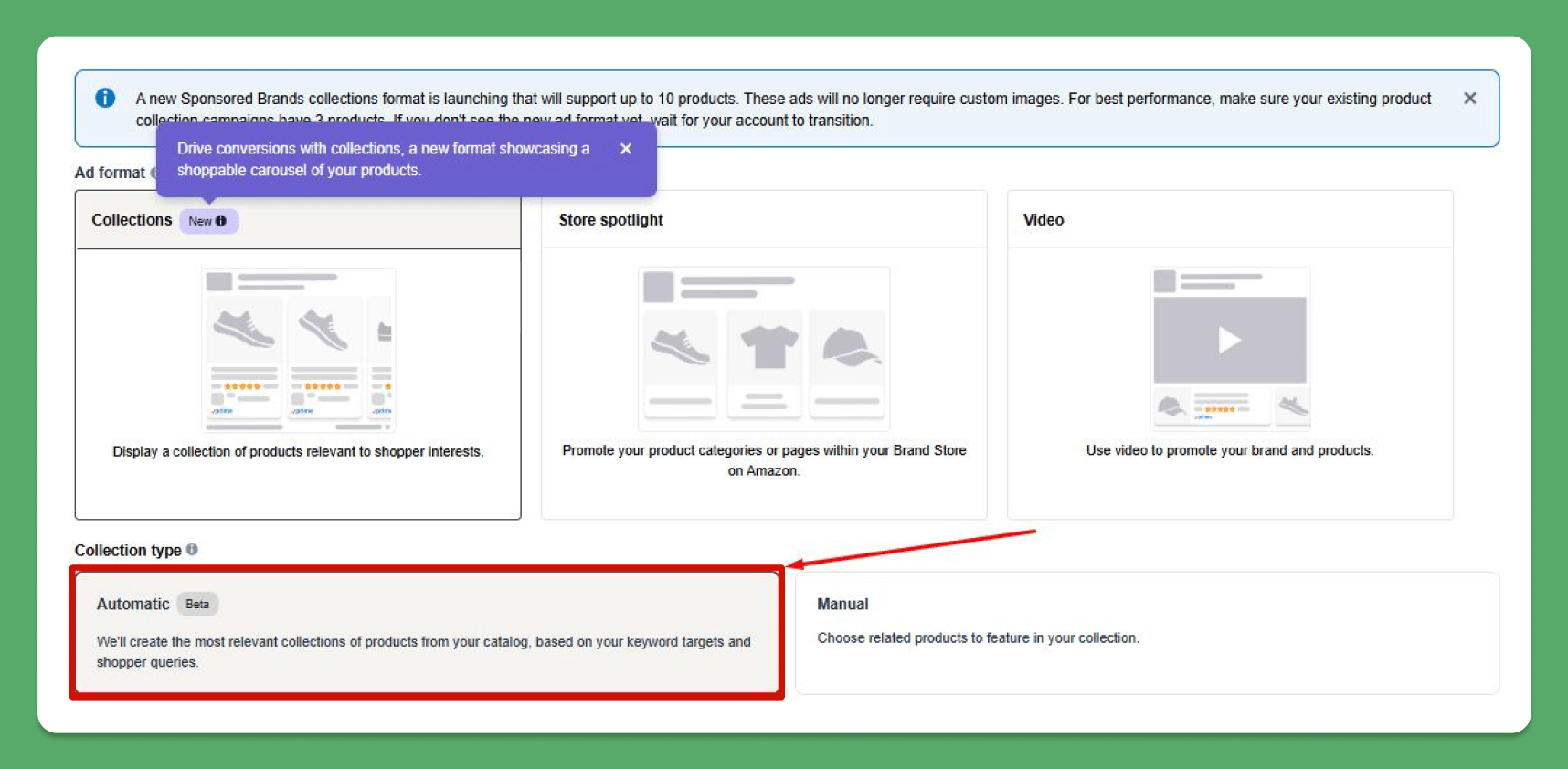
Amazon is introducing an Automatic Collections format in Sponsored Brands, marking a move towards automated advertising. Advertisers can now let Amazon automatically generate product groupings based on shopper queries and targeting signals, eliminating the need for manual selection.
Key points:
Sponsored Brands now include an Automatic Collections format
Product groupings are generated algorithmically based on targets and queries
No manual product selection or custom creatives required
Campaign structure and merchandising are increasingly automated
Amazon advertising is shifting towards greater automation, with AI managing campaign setup and optimization. Sellers now need to prioritize data quality and catalog structure, as performance will rely on how well products are organized and inputted, making backend inputs essential for results.
🔀 Amazon Introduces a Smarter Way to Transition Between ASIN Versions
Amazon is promoting a feature that allows sellers to link old and new product versions without variations. This helps brands retain valuable traffic and reviews from previous listings, which can be lost when launching updated models under new ASINs.
Key points:
Sellers can use the “Newer Version” relationship to connect old and new ASINs.
Upgraded products don’t require variations.
A link directs shoppers from the old listing to the new version.
Traffic is preserved if the original ASIN goes out of stock or is discontinued.
To set this up, sellers submit both ASINs in Seller Central. Amazon will link the original and updated product pages once approved, ensuring both share essential attributes to maintain demand and minimize sales loss during transitions.

🔍 Amazon Tests Seller Credit Score on Search Results
Amazon is testing a new SERP feature that shows a seller's “credit score” directly in search results. This introduces an additional layer of trust, shifting focus from product metrics to seller financial credibility.
What this could mean:
New CTR factor: Seller reputation may affect clicks, along with price and reviews
Trust signal test: Amazon is testing whether financial discipline boosts buyer confidence
Increased SERP complexity: More factors competing for attention in search
Likely experiment phase: Aligns with Amazon's pattern of testing during high-traffic times
It's still unclear if shoppers care about a seller's "credit score." Traditionally, reviews, price, and delivery speed are the main factors in decision-making, so this could remain niche or fade away. However, it suggests Amazon is exploring new trust indicators beyond product data.

💲 Amazon Tightens Discount Rules, Reshaping How Pricing Is Displayed
Amazon has introduced updates to how discounts and reference prices are calculated, directly impacting how pricing appears on product listings. The changes focus on increasing pricing accuracy and limiting inflated or inconsistent discount strategies that may mislead customers.
Key points:
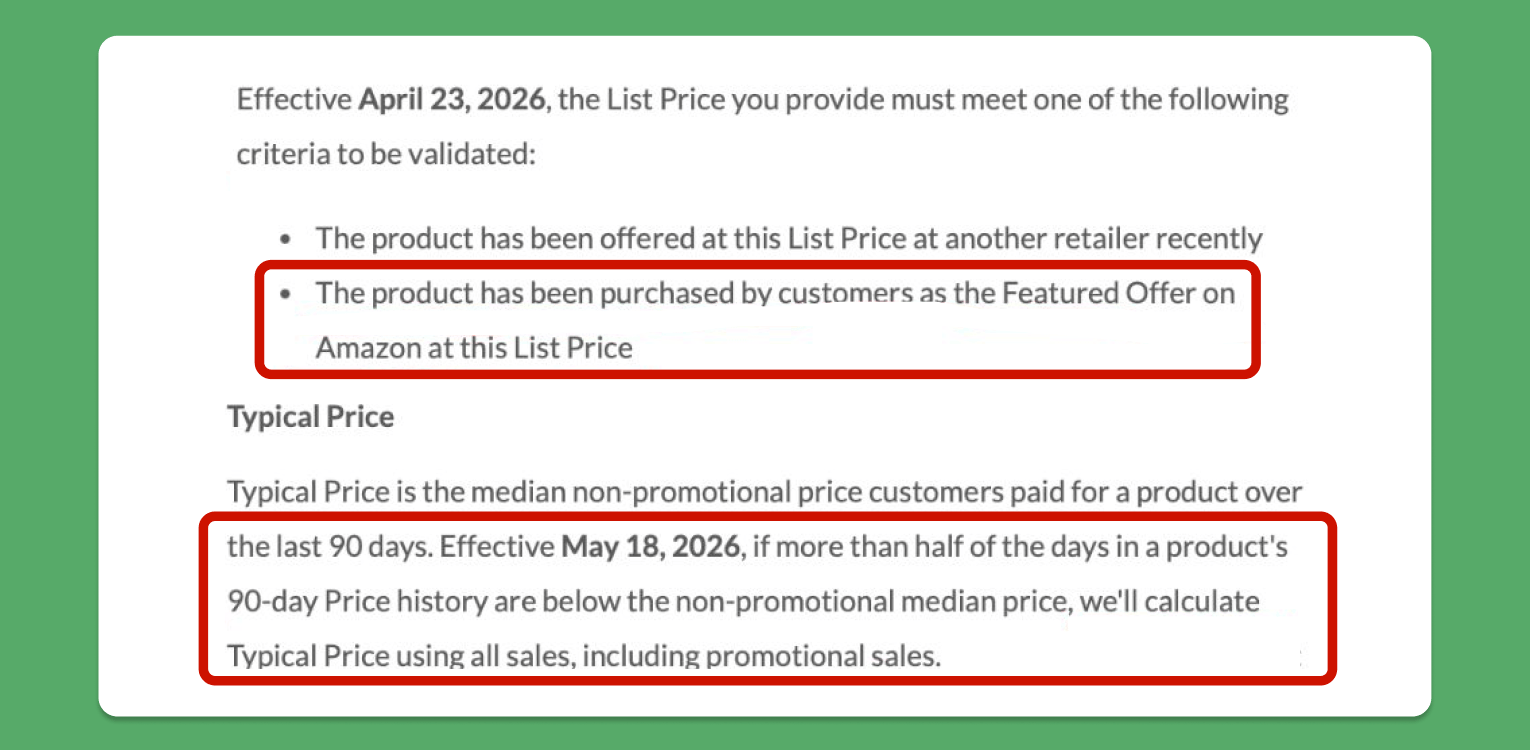
“List Price” must be verifiable via recent sales on Amazon or other retailers.
Strike-through pricing may be removed if the reference price cannot be validated.
“Typical Price” will include frequent discounted sales in its calculation.
Price history data is used to verify discounts.
Sellers must provide proof of a product's reference price, regardless of the sales platform. Consistent discounts will show a "Typical Price," validated by Amazon's pricing history. Maintaining consistent pricing strategies is crucial for improved visibility and higher conversion rates.
🌐 Amazon Expands Beyond Its Marketplace With Prime on DTC Sites
Amazon is piloting a feature that lets brands offer Prime shipping on their own websites, enabling customers to check out without being redirected to Amazon. This background verification of Prime eligibility allows for fast, free delivery and reduces friction in using Prime benefits outside of Amazon.
Key points:
Prime shipping is now available directly on brand websites without a redirect
No Amazon login required; verification happens in the background
Brands keep checkout, branding, and customer data ownership
Amazon handles fulfillment while brands retain control over returns and policies
This hybrid model lets sellers keep DTC control while using Amazon's logistics, improving the customer journey and reducing checkout drop-off. It highlights Amazon's strategy to expand its infrastructure for fulfilling orders across independent e-commerce sites, reinforcing its role in online retail.

💬 Amazon Feedback Policy Update – Handling Extortion the Right Way
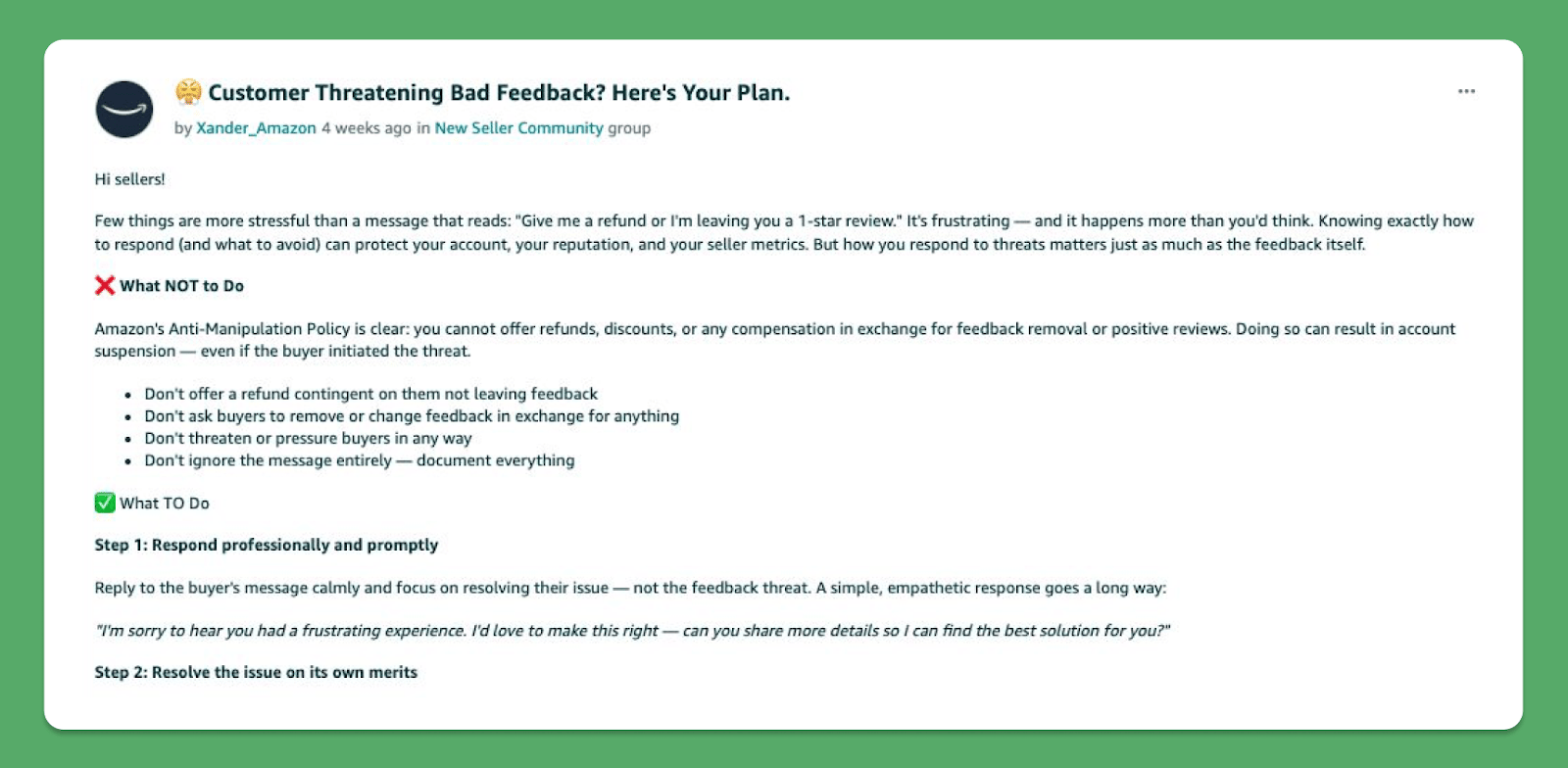
Amazon has reiterated its policy against buyer feedback manipulation, advising sellers on how to handle customers who threaten negative reviews for refunds. However, enforcement at the account level remains complex and inconsistent.
What Amazon clarified:
No incentives allowed: Sellers cannot offer refunds or compensation tied to feedback removal
Handle issues separately: Resolve customer problems without responding to the threat itself
Report extortion: Use Seller Central tools to flag abusive behavior
Possible removal: Feedback can be removed in some cases, but it is not guaranteed
Negative feedback can arise without compensation. Sellers must manage customer experiences and address risks from false claims. A process-driven approach is crucial: resolve issues quickly, document everything, flag abuse, and escalate with clear evidence, prioritizing customer needs and ensuring seller compliance.
📊 Amazon Upgrades Bid Recommendations With Performance-Based Signals
Amazon has enhanced its bid recommendation system with a new visual that shows how higher bids affect impressions. The model now also accounts for conversion potential, placement competition, audience behavior, and recent campaign performance.
Key points:
Bid visuals now include conversion likelihood and performance signals
Impression forecasts are adjusted based on competition and audience data
Suggested bids reflect efficiency, not just maximum visibility
Advertisers can evaluate performance across different bid levels more accurately
The update changes the suggested bid to reflect where Amazon expects optimal traffic, balancing visibility and conversion. This lets sellers make data-driven bidding decisions and manage campaigns more precisely.

Crushing it with $20K+ monthly sales on Amazon?
Let’s help you break through to the next level – guaranteed! 🚀
Our team of Amazon growth experts specializes in scaling successful businesses like yours. We’ll perform a deep dive audit of your operations, from optimizing product listings to fine-tuning your ad campaigns.
Here’s what we offer:
Comprehensive Analysis: Pinpoint the bottlenecks holding back your growth.
Actionable Recommendations: Uncover high-impact opportunities to boost sales.
Proven Results: We don’t just advise – we deliver guaranteed results.
👉 Ready to scale?
Click below to claim your free audit and unlock your business’s potential!
How did you like today's Newsletter? |
Reply