- Hunter's Insights
- Posts
- Amazon Cuts Deal Fees – New Pricing Favors Smaller Prime Day Sellers
Amazon Cuts Deal Fees – New Pricing Favors Smaller Prime Day Sellers

Ivan Marynych
March 25, 2026

Welcome to our weekly newsletter, Hunter's Insights!
In this special edition, we bring you essential Amazon updates and industry insights to keep you ahead in the fast-paced world of e-commerce:
📊 Amazon DSP Adds Performance+ Insights at Order Level
📅 New Prime Day Timeline – Inventory and Deal Windows Now Open
📉 Amazon Tests New “Lowest Price” Badge During Spring Sale
💲 Amazon Lowers Barrier for Prime Day Deals
🌡 Meltable Season Is Back – Amazon Sets April 20 Cutoff for Inventory
📈 Amazon Bets Big on AI – AWS Revenue Target Doubles to $600 Billion
🚛 Amazon Tests “Confidential Product” for MCF Shipping
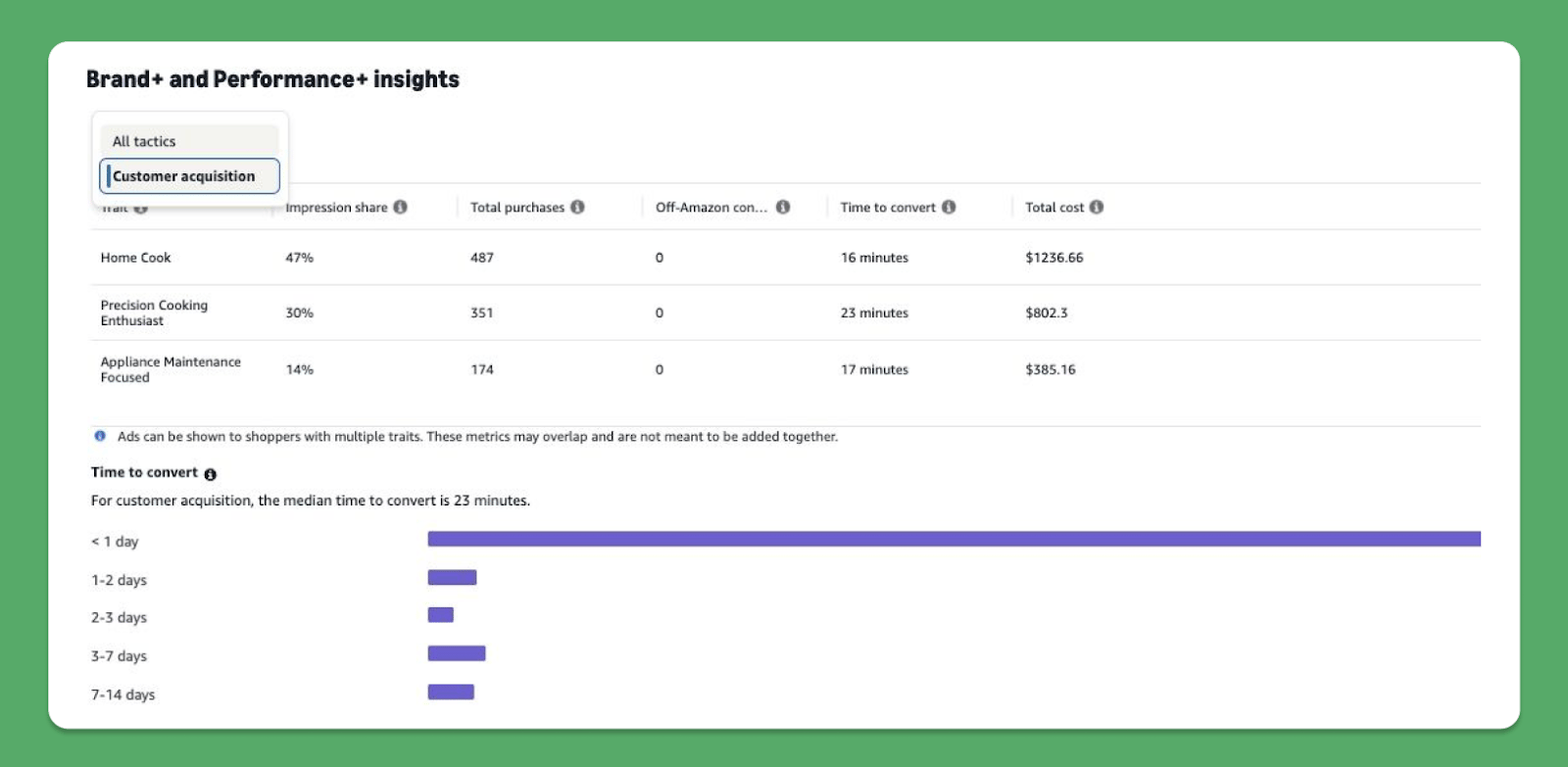
📊 Amazon DSP Adds Performance+ Insights at Order Level
Amazon has launched a new Performance+ Tactics Insights section in the DSP console, providing advertisers with enhanced visibility at the order level. This update offers key metrics that were previously difficult to access.
Key features include:
Time to conversion: Detailed breakdown of conversion times by day range.
Audience insights: Segmentation of “shoppers reached” by audience traits (e.g., Home Cook, Enthusiast).
DSP visibility: Clean performance view without AMC data.
Cross-tactic comparison: Simplified analysis of tactic performance across intent stages.
Understanding how different tactics perform across the funnel allows for better budget allocation and clearer expectations based on actual conversion behavior. Grouping multiple Performance+ tactics within the same order can further enhance effectiveness.
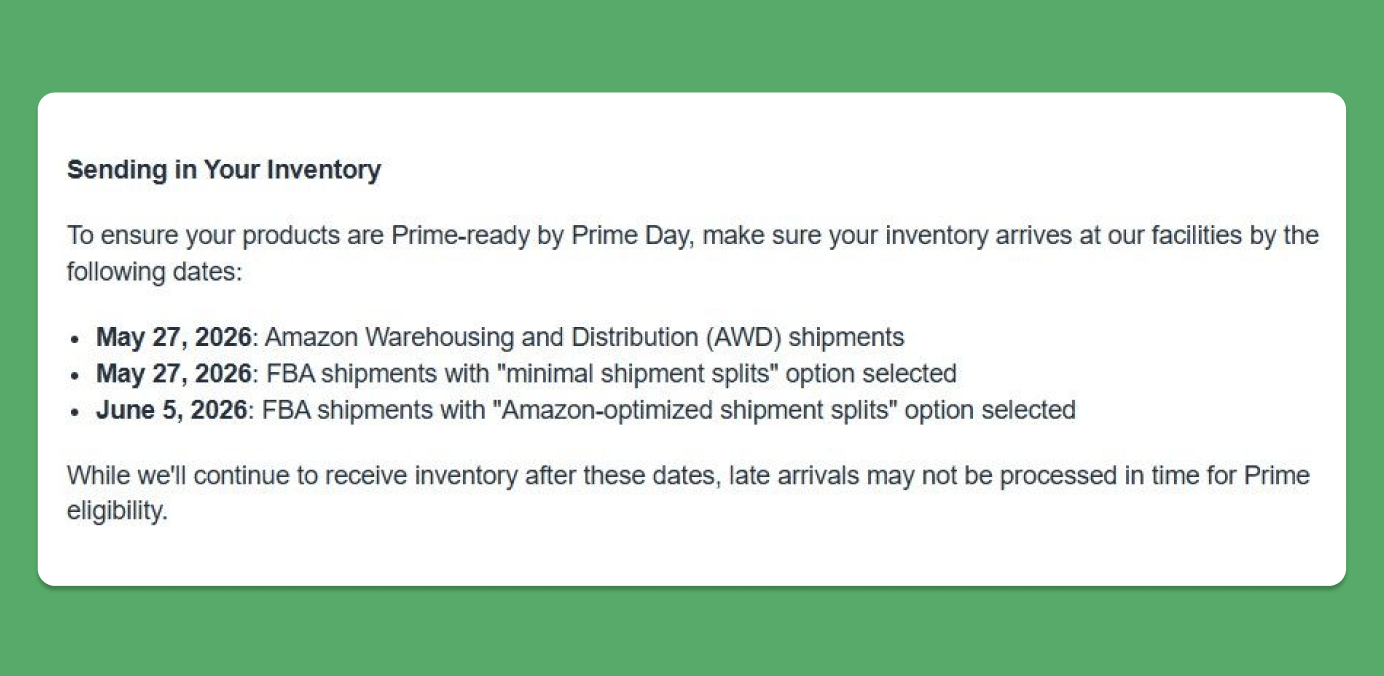
📅 New Prime Day Timeline – Inventory and Deal Windows Now Open
Amazon has indicated that Prime Day 2026 will likely move to June, as shown by new inventory deadlines in Seller Central. The early inventory cutoffs suggest a June event, leaving sellers with less time for planning.
Key updates:
Inventory deadlines: May 27 (AWD + minimal split FBA), June 5 (optimized split FBA)
Deals open now: Submission window for Best Deals and Lightning Deals is live
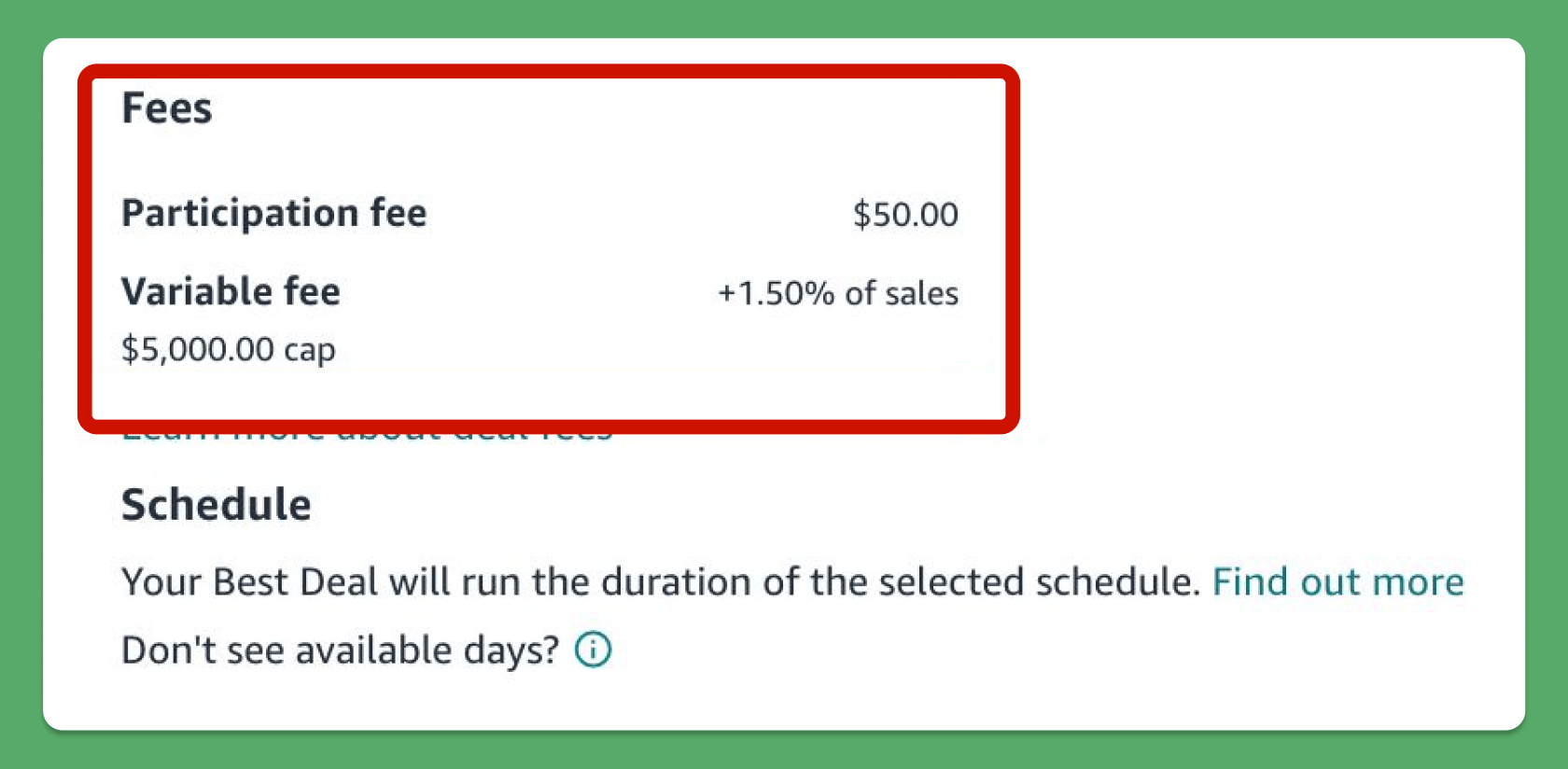
New pricing model: $100 upfront + 1.5% of promo sales (capped at $5,000)
Early incentive: $50 discount for deals created by April 30
With earlier deadlines and expanding performance-based fees, Prime Day preparation is becoming more structured. Sellers face tighter timelines, focused inventory planning, and clearer expectations for promo ROI for this major event.
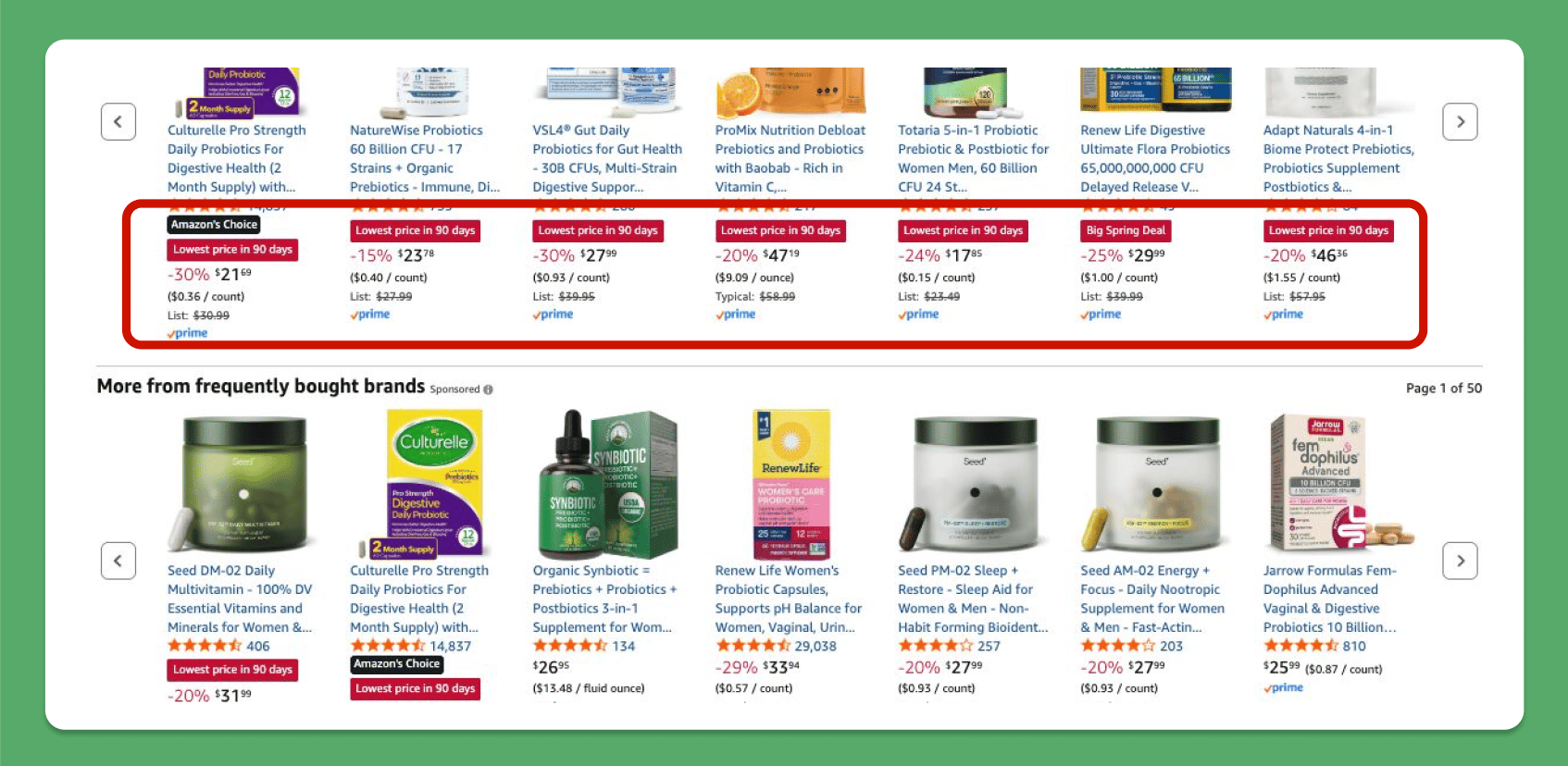
📉 Amazon Tests New “Lowest Price” Badge During Spring Sale
Amazon is testing a new badge during the Big Spring Sale, marking products as “Lowest Price in 90 Days” (or 30 days). This badge is appearing on various ASINs and sometimes replaces the “Big Spring Deal” badge, indicating a focus on price credibility over event labeling.
What’s happening:
New price badge: “Lowest Price in 90 Days” (and 30-day variants)
Badge replacement: In some cases, replacing standard sale badges
Stronger value signal: Focuses on historical price competitiveness
Ongoing testing: Likely part of Amazon’s experimentation during tentpole events
From a shopper's perspective, this badge may carry more weight than a generic sale label—it directly validates the quality of the deal. For sellers, this introduces a new dynamic where price history could influence visibility and conversion just as much as participation in promotional events.
💲 Amazon Lowers Barrier for Prime Day Deals
Amazon has revised its Prime Day deal fee structure from a flat fee to a performance-based model, benefiting smaller brands. Sellers now pay a $100 upfront fee plus 1.5% of promotional sales, capped at $5,000, instead of the previous $1,000 flat fee for Event Best Deals.
What’s changed:
Lower entry cost: $100 upfront replaces the $1,000 flat fee
Performance-based pricing: 1.5% of promo sales, capped at $5,000
Small brand advantage: Sellers under ~$60K in deal sales pay less than before
Early incentive: $50 discount for submitting deals ahead of the deadline
This structure lowers entry barriers for smaller sellers and links costs to performance, allowing more brands to join Prime Day without high upfront fees. Larger brands may pay more under the capped percentage model, supporting a pay-for-performance approach that benefits both sellers and Amazon.
🌡 Meltable Season Is Back – Amazon Sets April 20 Cutoff for Inventory
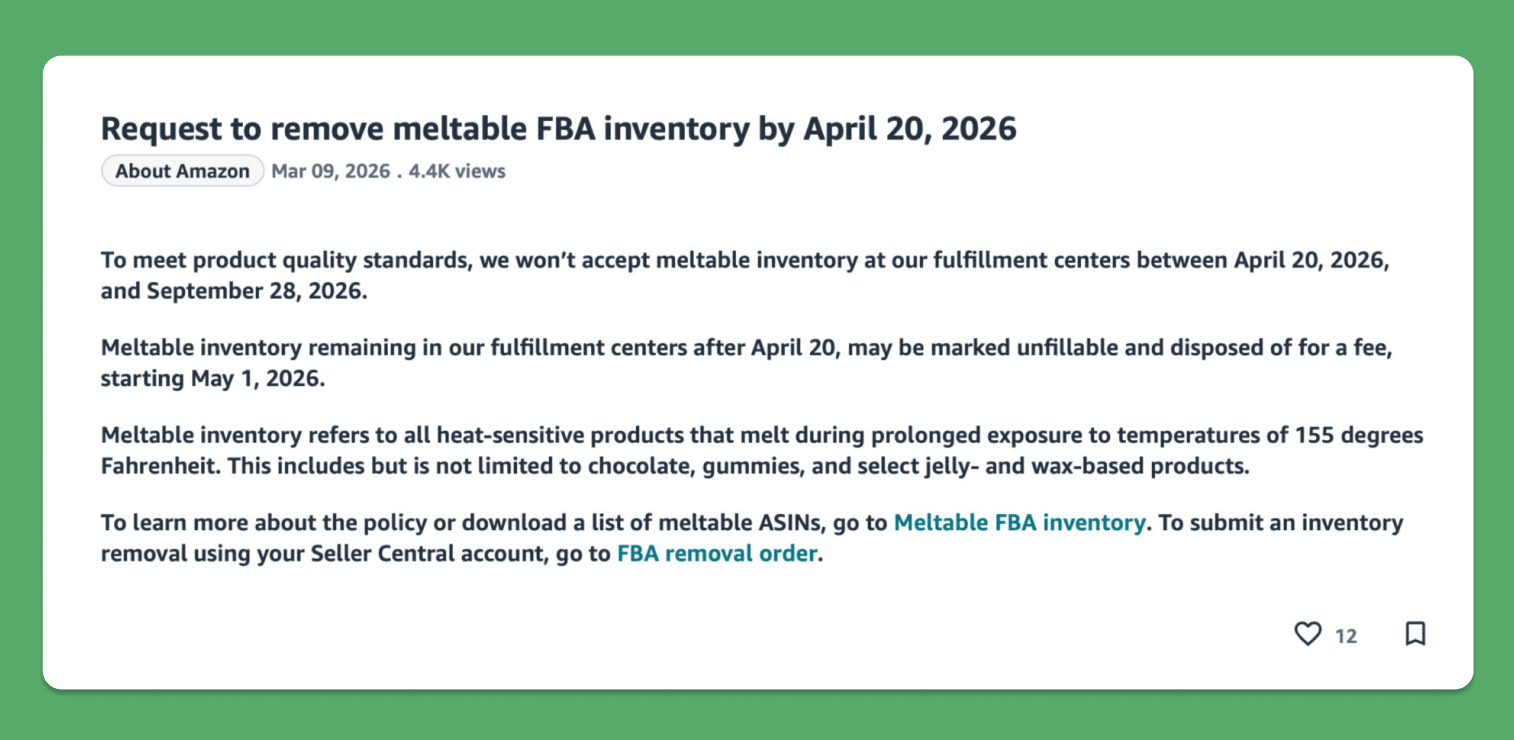
Amazon is reinstating meltable inventory restrictions for 2026, with an inbound shipping cutoff on April 20. Starting May 1, meltable products at fulfillment centers will be eligible for disposal, subject to fees. Sellers should check the meltable inventory report for affected ASINs.
Key updates:
Inbound cutoff: No new meltable inventory accepted after April 20
Disposal risk: Inventory in FCs becomes eligible for removal/disposal starting May 1
ASIN-level enforcement: Products on the meltable list will have inbound shipments rejected
Fee relief: Low-Inventory-Level fees are waived for meltable products from April 1 to October 12
Sellers should download the meltable ASIN list from Seller Central and audit their catalog. To boost summer sales, consider switching to seller-fulfilled (FBM/SFP) with temperature-controlled shipping. Early preparation helps avoid disposal fees and ensures product availability in warmer months.
📈 Amazon Bets Big on AI – AWS Revenue Target Doubles to $600 Billion
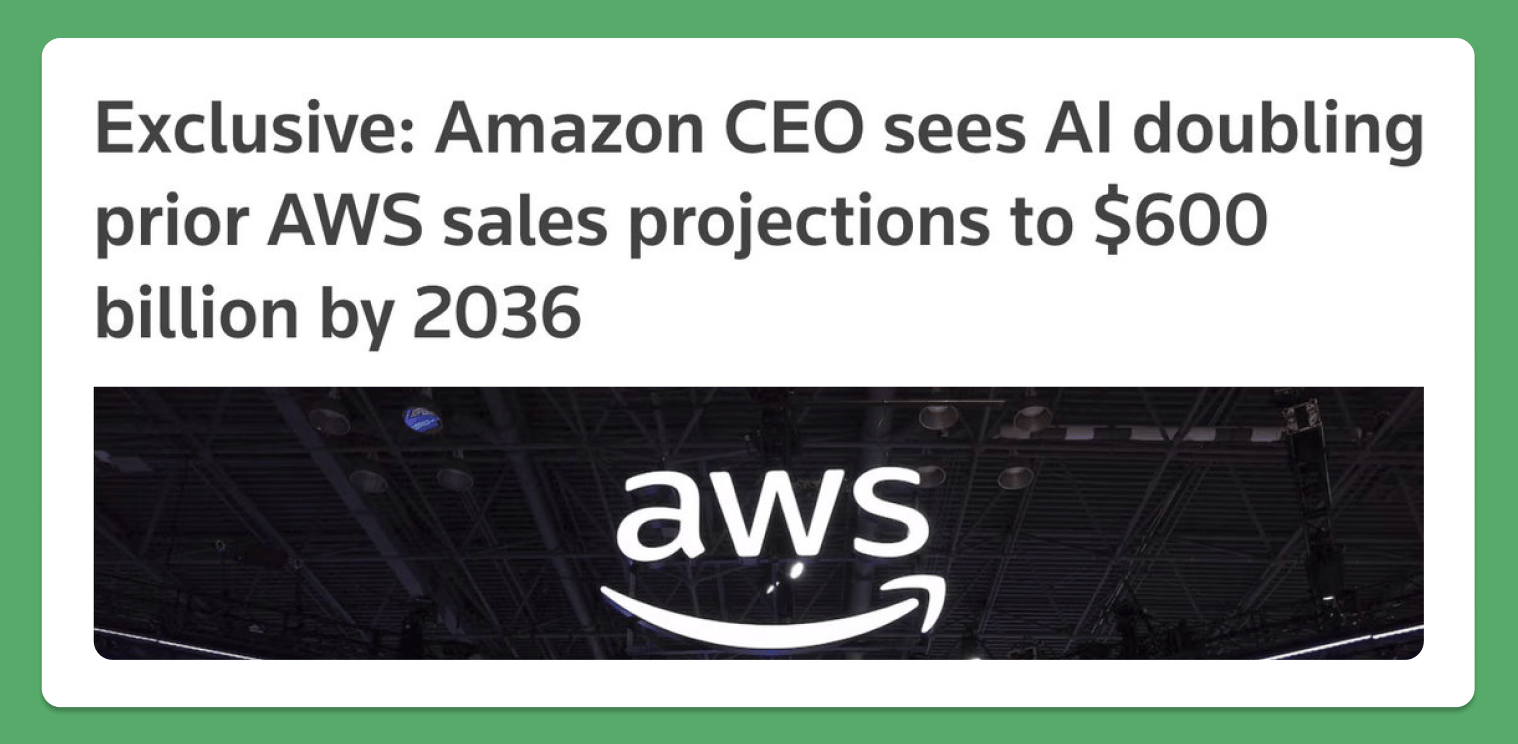
Amazon expects Amazon Web Services to hit $600 billion in annual revenue by 2036, doubling its previous forecast. This growth is driven by rising AI demand and infrastructure investments, enhancing advertising, retail, logistics, and shopping experiences.
What this signals:
AI as infrastructure: Amazon is scaling foundational systems, not just launching features
Ecosystem-wide impact: Improvements in AWS flow into ads, search, Rufus, and Seller Central tools
Long-term positioning: Amazon is investing ahead of demand to control future AI-driven commerce
Strategic shift: AI competition is moving from tools to infrastructure ownership
If AWS reaches $600B, it would rival the scale of entire Fortune 500 companies on its own. For sellers and advertisers, this reinforces a key reality: success will increasingly depend on how well you align with systems you don’t control—but that define visibility, performance, and growth.
🚛 Amazon Tests “Confidential Product” for MCF Shipping
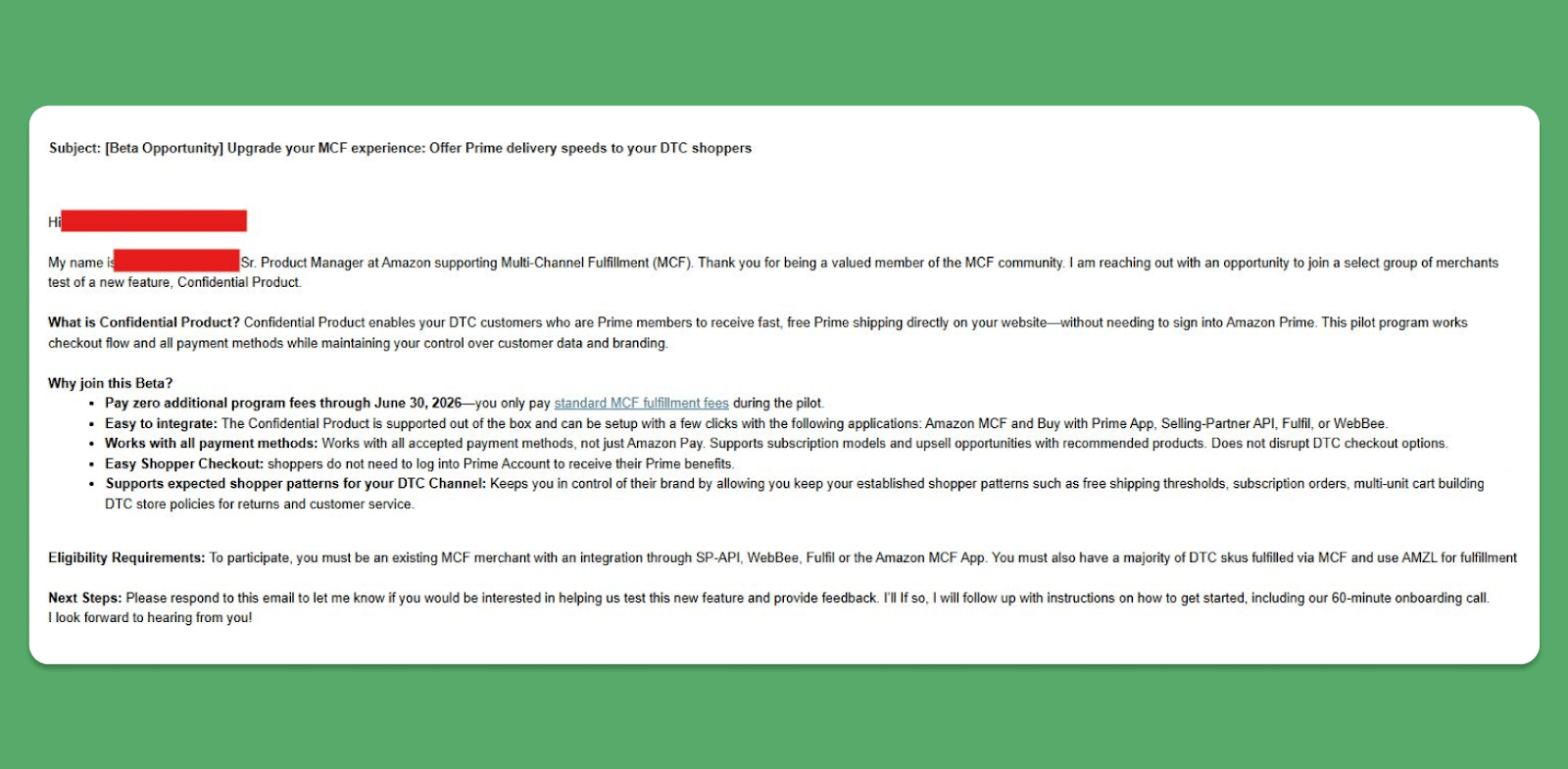
Amazon is testing a new MCF (Multi-Channel Fulfillment) program called “Confidential Product,” allowing non-Prime shoppers on DTC websites to access Prime-like shipping speeds. This enables brands to offer Amazon-level delivery directly on their sites, without customers needing to shop on Amazon.
Key points:
Non-Prime customers can enjoy fast shipping through Amazon logistics.
Expands Amazon's role as a fulfillment backbone beyond its marketplace.
Brands can provide premium delivery while keeping customers on their sites.
Faster shipping might lead users back into Amazon’s ecosystem over time.
This initiative indicates Amazon's strategy to extend benefits outside its marketplace and could provide significant advantages for sellers if pricing is competitive, balancing DTC control with Amazon's logistics efficiency.
Crushing it with $20K+ monthly sales on Amazon?
Let’s help you break through to the next level – guaranteed! 🚀
Our team of Amazon growth experts specializes in scaling successful businesses like yours. We’ll perform a deep dive audit of your operations, from optimizing product listings to fine-tuning your ad campaigns.
Here’s what we offer:
Comprehensive Analysis: Pinpoint the bottlenecks holding back your growth.
Actionable Recommendations: Uncover high-impact opportunities to boost sales.
Proven Results: We don’t just advise – we deliver guaranteed results.
👉 Ready to scale?
Click below to claim your free audit and unlock your business’s potential!
How did you like today's Newsletter? |
Reply